Hair transplant near Basel: a long-lasting solution for hair loss
Hair transplantation makes it possible to restore hair density in the long term by removing follicles from a donor area and reimplanting them in the areas affected by alopecia.
At the Biolaser Center, each graft is designed to obtain the best possible coverage while preserving the follicular capital of the donor area. The number and distribution of grafts are adapted to each patient in order to seek a natural and harmonious result.
The procedure is carried out in a secure medical setting, by a trained and dedicated team, with support before the operation and post-operative follow-up throughout the regrowth.
Located in Saint-Louis, near Basel, Zurich, Weil am Rhein, Lörrach and Freiburg im Breisgau, the Biolaser Centre offers local care and competitive rates.
What are the different stages of alopecia?
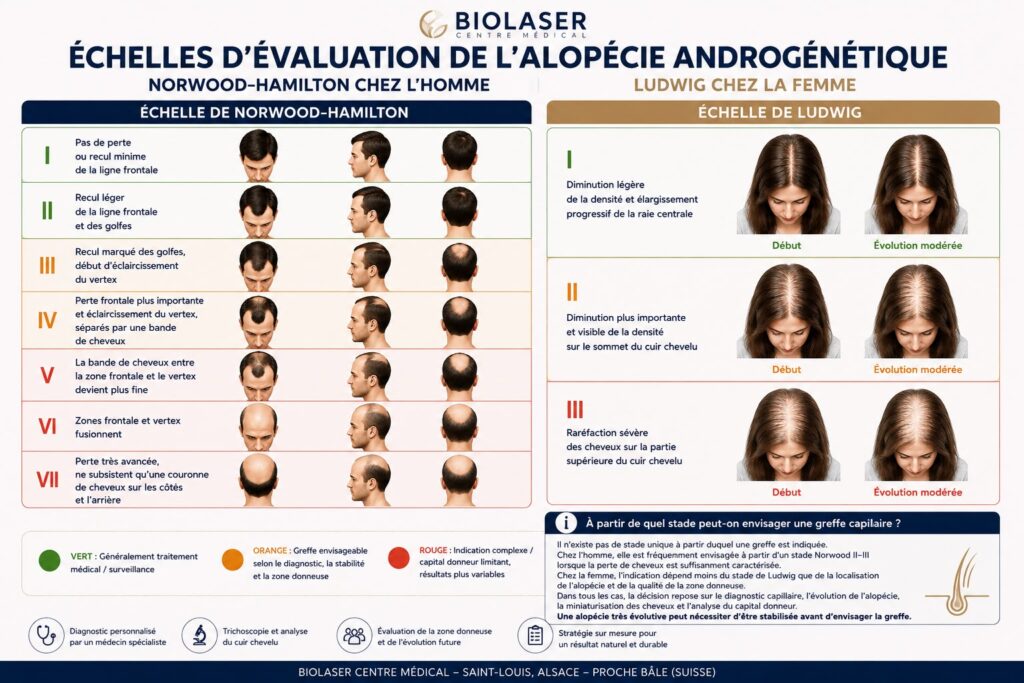
Assessing the stage of alopecia allows you to better understand its evolution and plan a possible hair transplant.
In humans, the Hamilton-Norwood scale distinguishes 7 stages, ranging from a slight receding of the frontal line (stages I-II) to extensive loss on the top of the skull with persistence of a crown of hair (stage VII). The more alopecia progresses, the more essential it becomes to preserve donor capital.
In women, the Ludwig scale distinguishes 3 stages: from a slight widening of the central parting to a significant thinning of the hair on the top of the scalp. Other classifications, such as Sinclair or Olsen, can complete this assessment.
However, the stage is not sufficient to determine the indication for a transplant. Age, the evolution of alopecia, miniaturization, the surface to be covered and the available follicular capital are also taken into account.
At what stage can a hair transplant be considered?
There is no single stage at which a transplant is indicated. In humans, it is frequently considered from a Norwood II–III stage, when hair loss is sufficiently characterized. In women, the indication depends less on the Ludwig stage than on the location of the alopecia and the quality of the donor area.
What is a hair transplant?
Hair transplantation consists of taking follicles from a donor area, usually at the back of the skull, to reimplant them in the areas affected by hair loss: frontal line, gulfs, top of the skull or tonsure.
The objective is to obtain a natural and harmonious coverage while preserving the follicular capital. Since the harvested follicles do not grow back in the donor area, their number and distribution must be carefully planned, especially to preserve the possibility of future surgery.
💡Namely: a graft ≠ a hair A graft is usually a follicular unit that can naturally contain 1, 2, 3 or more hairs. Two grafts with the same number of grafts can therefore offer different coverage depending on the number of hairs per graft, their caliber and their distribution. In an FUE transplant, single-hair grafts are used to create a natural hairline, while multi-hair units contribute more to the density of the areas at the back. The issue is therefore not only the number of grafts implanted, but also their selection and distribution. |
What are the different hair transplant techniques?
Several techniques are now used to perform a hair transplant. They differ mainly in the way in which the follicles are removed and implanted.
| Technical | Principle | To remember |
| FUT | A strip of scalp is taken from the donor area and then divided into grafts. | A more invasive technique, which leaves a linear scar at the back of the skull and involves healing of the sampling area. |
| FUE | The follicular units are collected individually from the donor area. | No strip sampling and very discreet point scars. |
| DHI | A variant of FUE in which the grafts are implanted using an implanter pen. | Allows precise control of the layout, but can be more restrictive to treat large areas. |
| Sapphire FUE | The follicles are harvested using the FUE method and fine incisions are made with a sapphire blade before implantation. | Technique chosen by Biolaser to work with precision on the creation of recipient sites, the distribution and orientation of the grafts. |
What hair transplant technique is used at the Biolaser Center in Saint-Louis?
At the Biolaser Center, we perform FUE with opening of the recipient sites using sapphire blades. The follicular units are taken individually from the donor area and then reimplanted in the areas affected by hair loss.
The FUE technique: a follicle-by-follicle sample
With FUE (Follicular Unit Extraction), the follicular units are extracted one by one from the donor area, without removing a strip of scalp.
The number of grafts is determined according to the surface to be treated and the capacities of the donor area, with one objective: to obtain the best possible coverage while preserving the available follicular capital.
Receiving sites opened with sapphire blades
After the collection, fine incisions are made using sapphire blades to create the sites that will accommodate the grafts. This step allows you to work precisely on their distribution, orientation and angle of implementation, essential parameters to seek a natural result.
Hair transplantation remains above all a medical procedure : the technique and the number of grafts are adapted to each patient according to their alopecia and follicular capital.
The right balance between coverage and preservation of the donor area
The number of grafts available in the donor area is limited. The objective is therefore not to remove as much as possible, but to use them in a reasoned way to obtain the best possible coverage on the areas to be treated, while preserving the follicular capital.
The removal and distribution of the grafts are thus adapted to each patient in order to obtain a natural and harmonious result, without overexploiting the donor area and retaining, where possible, possibilities for a future operation.
Why does Biolaser favor Sapphire FUE?
We chose Sapphire FUE because it meets our objective: to achieve a high density and a natural result while preserving the donor area as much as possible.
This technique has several advantages:
- No removal of a strip of scalp, unlike FUT: the follicles are extracted individually, which avoids the linear scar characteristic of this technique.
- Very fine and precise incisions on the recipient area thanks to the sapphire blades. Their finesse makes it possible to work precisely on the location of future grafts.
- An implantation designed for high density : the objective is to bring the grafts closer together when the characteristics of the scalp and the donor area allow it, in order to regain a visually denser hair.
- A natural result, thanks to the work on the distribution, orientation and angle of hair implantation.
- A preserved donor area : the collection is planned to distribute the extractions and avoid overexploiting certain areas. This is a central point of the Biolaser approach.
However, the technique alone does not make the quality of a graft. The medical diagnosis, the number and distribution of grafts, the design of the frontal line and the experience of the team are just as decisive. This is why Biolaser combines Sapphire FUE with medical care and personalized follow-up at the center.
💡To remember A hair transplant restores balding areas, but does not stop the progression of alopecia. While the transplanted hair is generally more resistant, the native hair around the transplanted area may continue to miniaturize and fall out. The project must therefore be thought of in the long term, taking into account the age, stage and evolution of alopecia, family history and donor capital. The aim is to obtain a result that remains harmonious over time, while retaining enough grafts for a possible future operation. When indicated, complementary treatments can also be offered to stabilize alopecia and preserve native hair. |
How is a hair transplant performed?
A hair transplant is prepared in several stages, from the first consultation to the follow-up of the regrowth. At the Biolaser Centre, near Basel, Zurich, Weil am Rhein, Lörrach, and Freiburg im Breisgau, this care makes it possible to precisely define the transplant project, to check the medical indication and to support the patient before, during and after the operation.
La consultation et le diagnostic capillaire
Cette analyse permet d’estimer le nombre de greffons pouvant être prélevés sans compromettre l’aspect futur de la zone donneuse. La stratégie est pensée à long terme : l’objectif n’est pas de prélever le maximum de greffons en une séance, mais d’utiliser intelligemment un capital donneur limité.
À l’issue de cette évaluation, le médecin détermine si la greffe est indiquée et établit un projet personnalisé ainsi qu’un devis.
La préparation de la greffe
Le dessin de la ligne frontale
Le prélèvement et l’implantation des greffons
L’intervention dure plusieurs heures et dépend notamment du nombre de greffons nécessaires.
What is the follow-up after a Sapphire FUE hair transplant?
The follow-up after a Sapphire FUE hair transplant allows you to control healing, track regrowth and monitor the evolution of native hair. At the Biolaser Center, follow-up continues for the first year and can last up to 18 months, especially for tonsure.
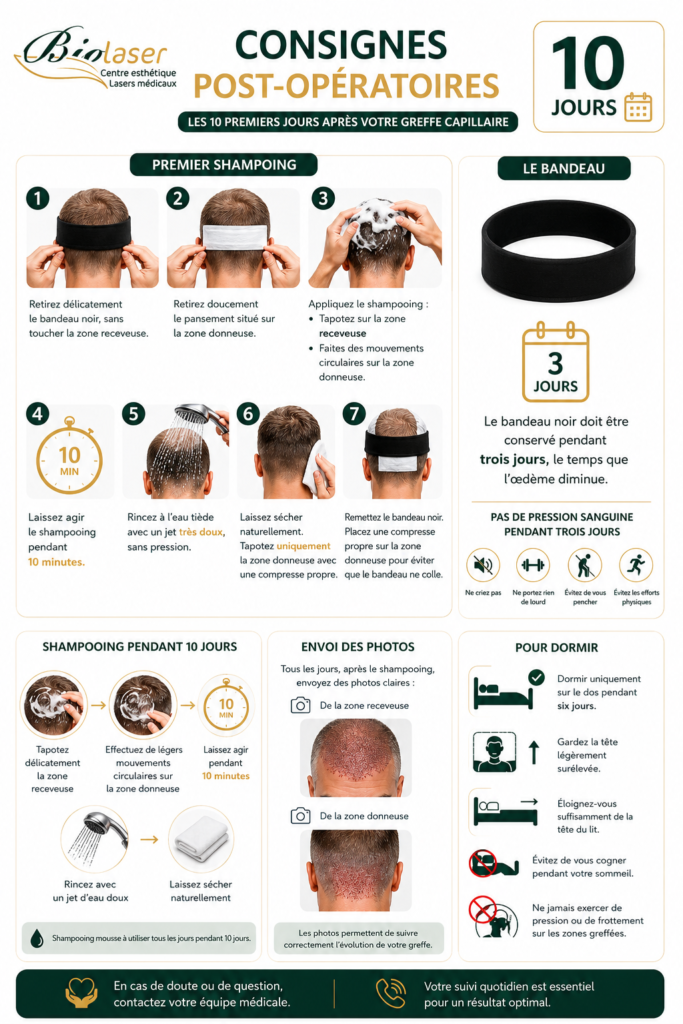
- D1 to D10 – Healing: care of the donor and recipient areas, home washing protocol and photographic follow-up to control healing and protect the grafts.
- Day 30 – Medical check-up: verification of healing and follow-up of shock loss, a frequent transient loss of transplanted hair while the follicles remain implanted. Additional treatments can be adapted if necessary.
- M3-M4 – Beginning of regrowth: the first new hair gradually appears. They are still thin and the result remains far from the final density.
- M6 – First visible results: regrowth becomes more appreciable. Standardised photographs and, if necessary, trichoscopy can be used to assess density, regrowth quality and native hair.
- M9-M12 – Evaluation of the result: the hair gradually gains in density, size and maturity. The result can be compared to the photographs taken before the transplant.
- M15-M18 – Final maturation: Longer follow-up may be required for some areas, including tonsure, which is generally slower in evolution.
This prolonged follow-up makes it possible to accompany each stage of regrowth, but also to monitor the evolution of alopecia and to preserve as much as possible the non-transplanted hair.
Results before/after hair transplant
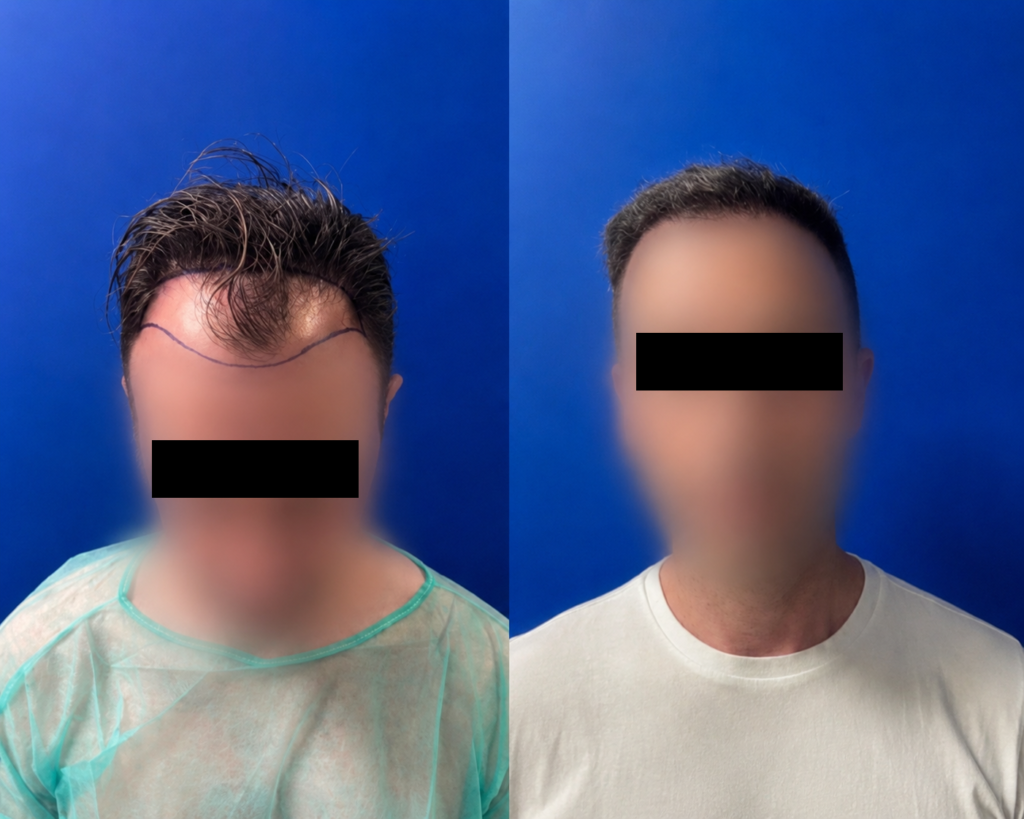
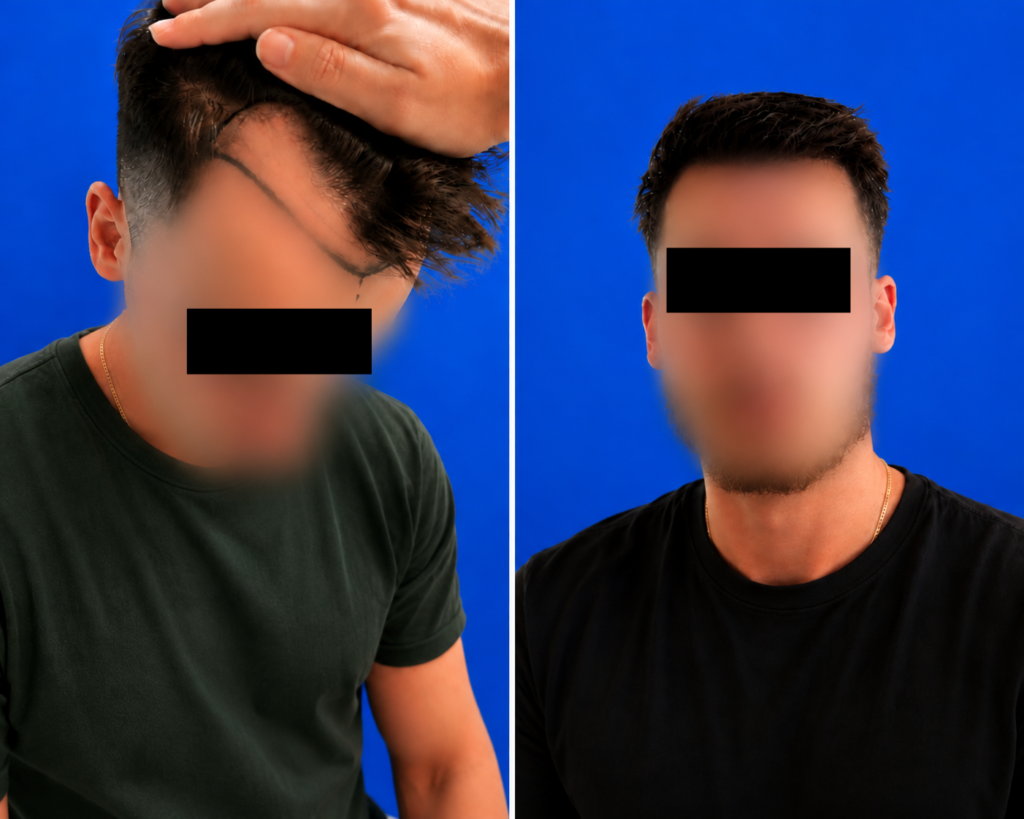
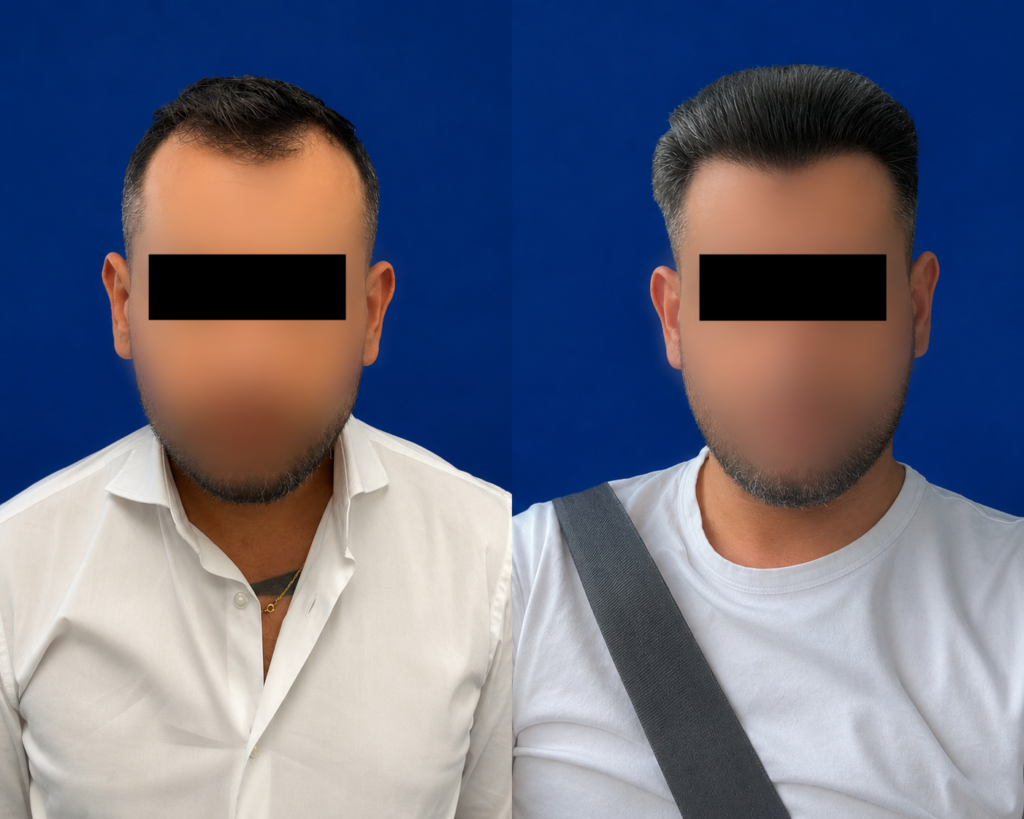
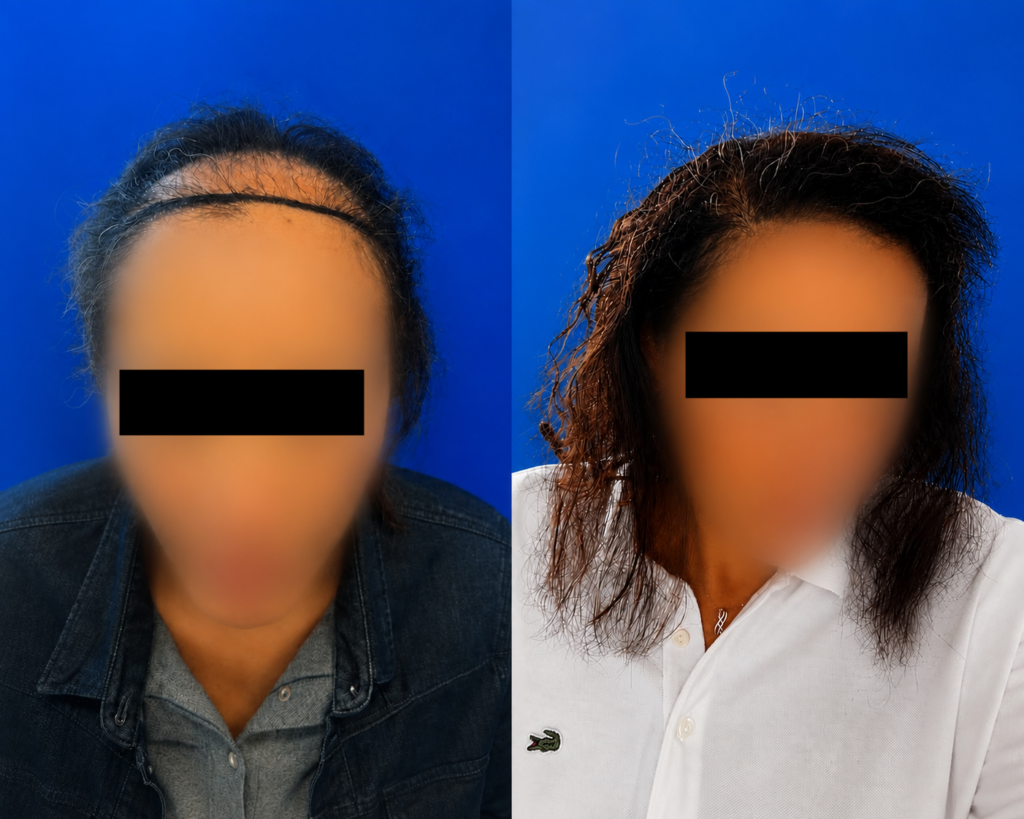
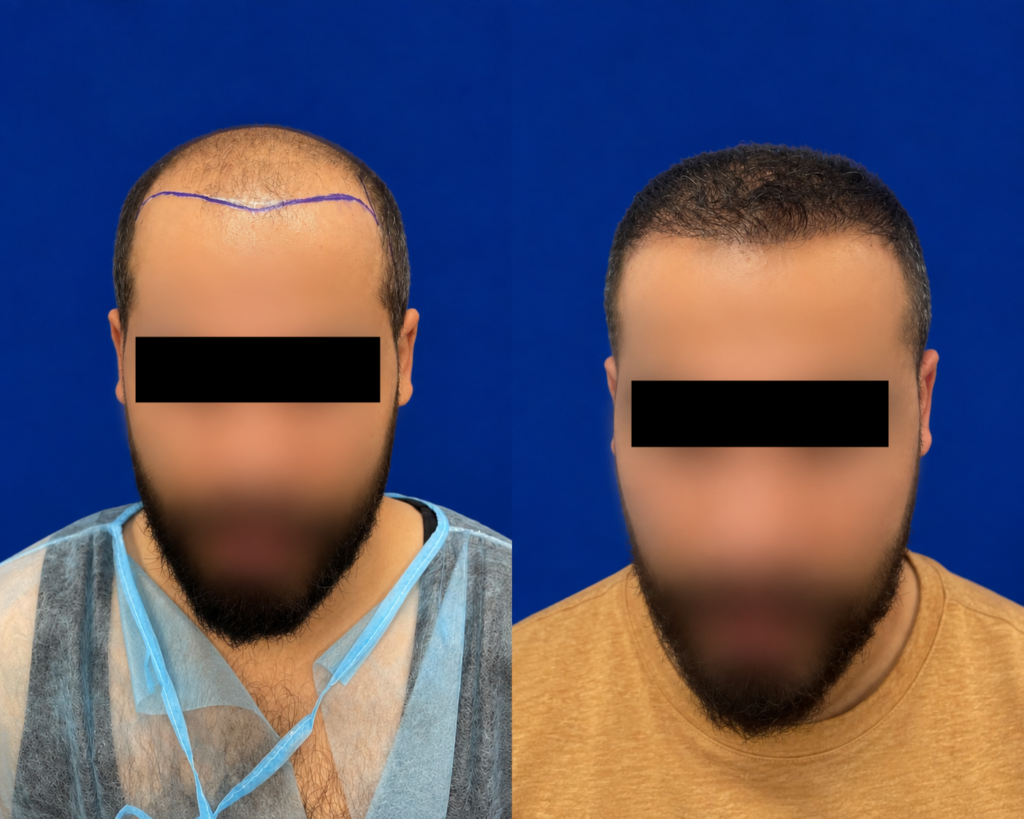
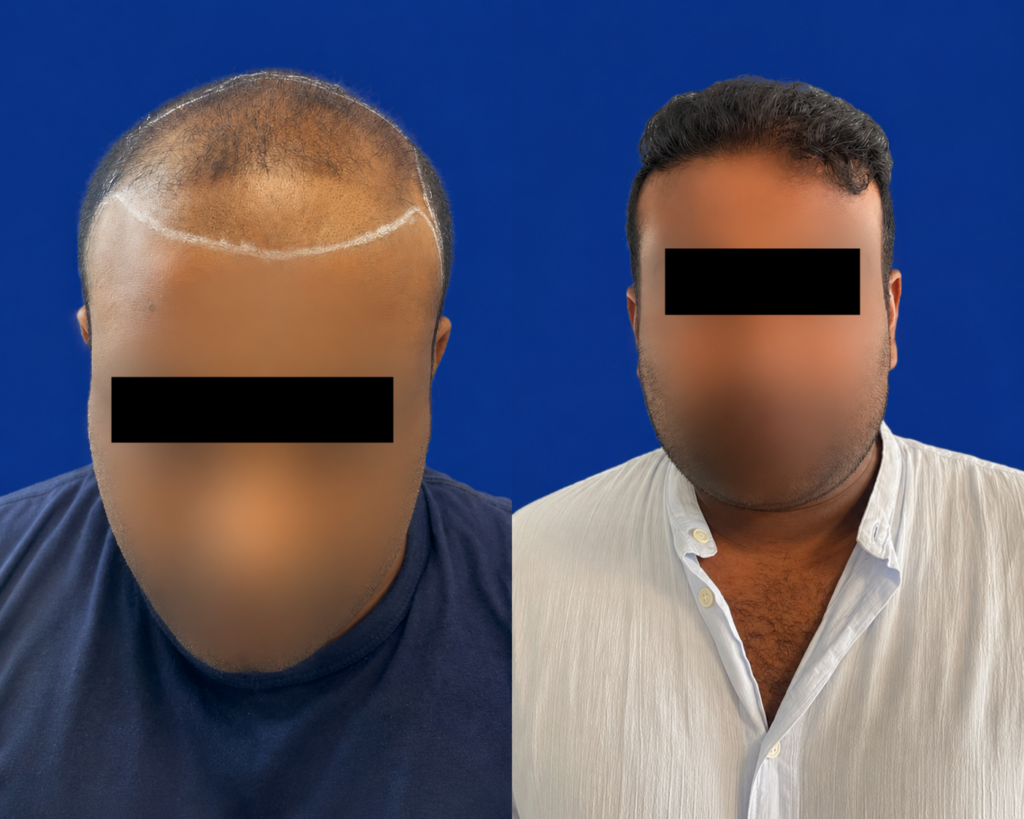
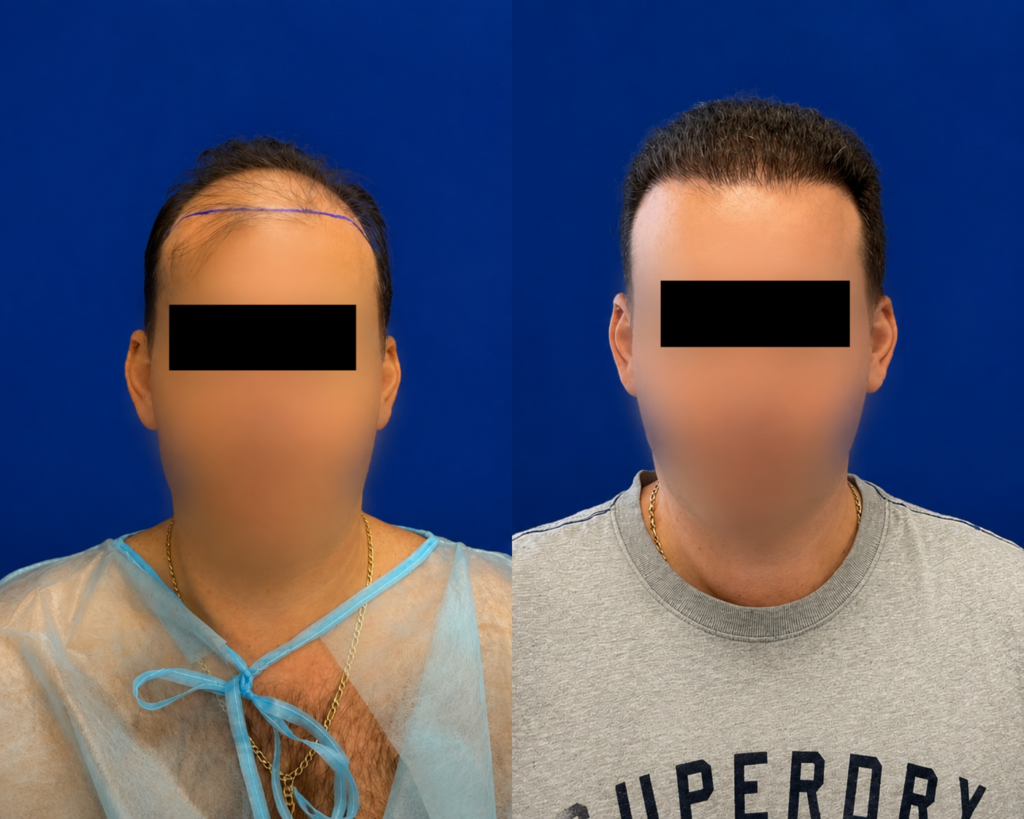
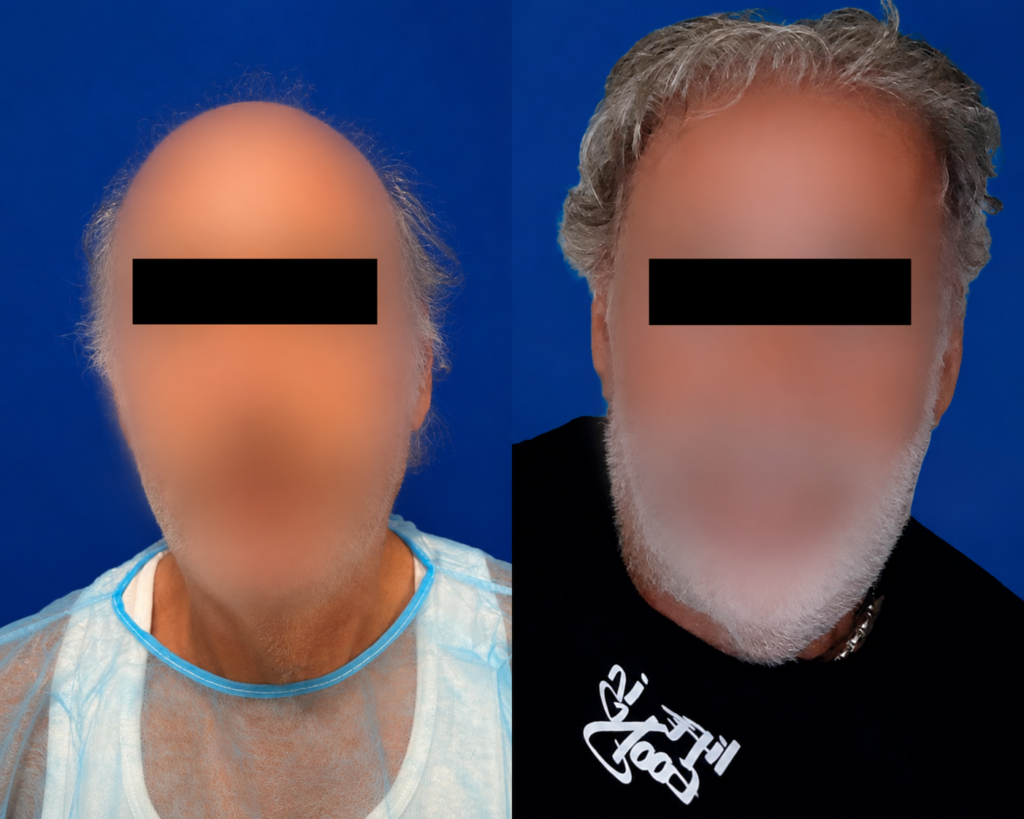
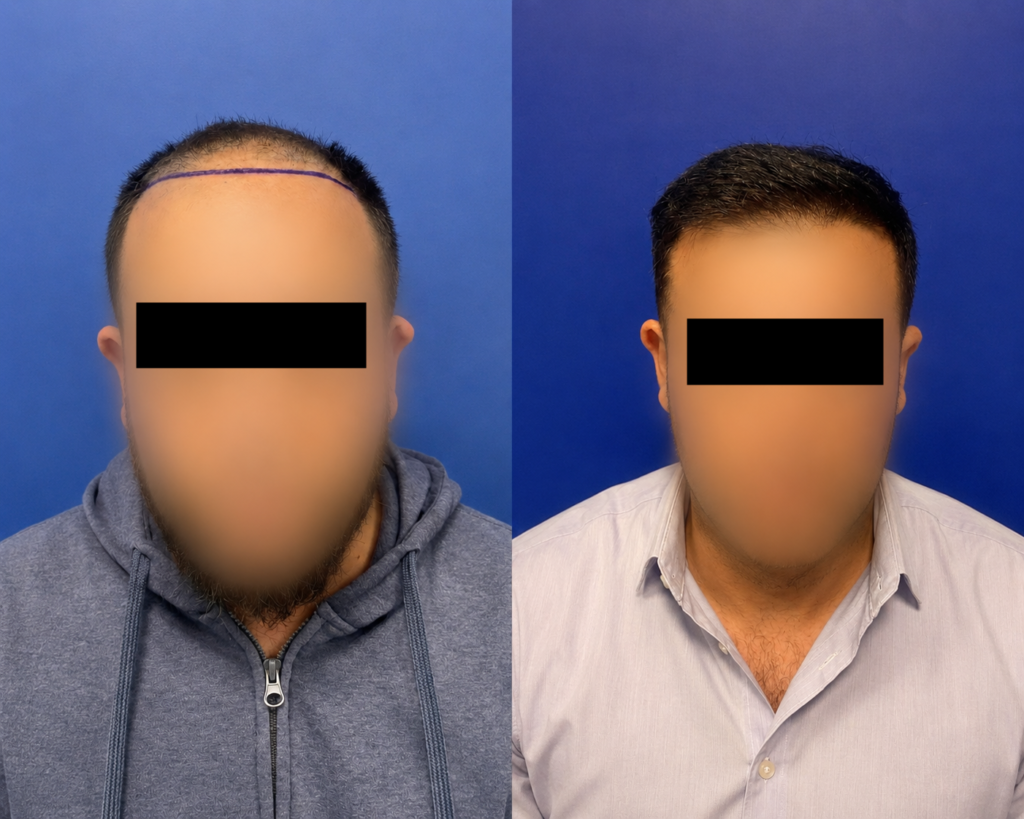
Results presented for illustrative purposes. The results of a hair transplant vary from patient to patient and cannot be guaranteed.
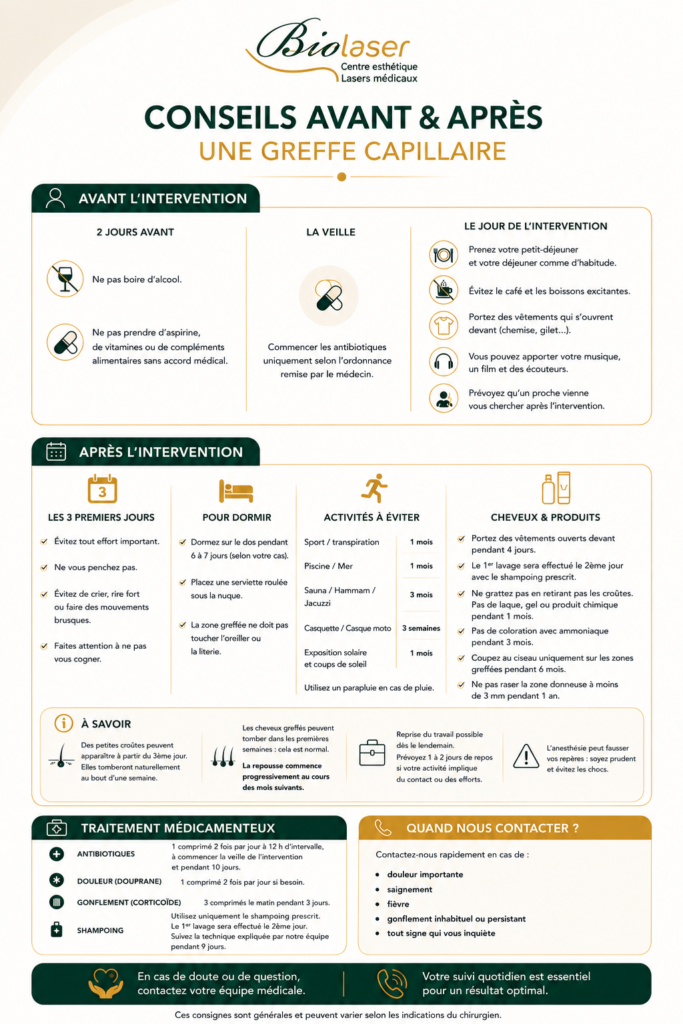
Some tips before and after hair transplantation
Beard transplantation to densify or redefine hair growth
Beard transplantation is based on the same principle as hair transplantation: follicular units are usually taken from the back of the scalp and then implanted on the face.
It can help to densify a sparse beard, fill in hairless areas, improve beard-mustache continuity or redraw contours. In some cases, it can also help to camouflage a scar.
To obtain a natural result, particular attention is paid to the choice of grafts as well as their angle, direction and distribution. A preliminary consultation allows us to evaluate the existing hair, the donor area and the number of grafts needed. As with hair, regrowth occurs gradually over several months.
What hair loss treatments can be combined with a hair transplant?
Hair transplantation can restore bald areas, but does not necessarily stop the progression of alopecia. Depending on the diagnosis, additional treatments may be offered to preserve native hair and stabilize hair loss.
- Hair mesotherapy : superficial micro-injections are carried out in the scalp according to a protocol adapted to the indication.
- Hair micrograft : a small amount of tissue from the scalp is removed, prepared and then reinjected into the affected areas. It can complement the management of hair loss, but does not replace an FUE transplant on an area without follicles.
- Minoxidil and finasteride : these medical treatments can be discussed in case of androgenetic alopecia, depending on the patient’s profile, gender, history and possible contraindications.
What is the price of a hair transplant?
The price of a hair transplant varies according to each patient and depends in particular on the size of the area to be treated and the number of grafts needed to achieve the desired density.
During the 1st consultation at the Biolaser Center, the doctor evaluates your alopecia and your donor area in order to define the transplant project. A personalized quote is then given to you before the intervention.
- For a hair transplant in a medium to large area, it costs 5000€.
- For a hair transplant of a small area/frontal line, it costs 3800€.
We offer competitive rates, with the aim of making hair transplantation accessible while maintaining rigorous medical care and local follow-up.
Why choose the Biolaser Center for your hair transplant?
At the Biolaser Center, hair transplantation combines technical expertise, medical safety and local monitoring. Each procedure is carried out by a trained and dedicated team, with particular attention paid to the density of the result and the preservation of the donor area.
In particular, you benefit from:
- personalised medical care;
- a graft aimed at a high density, without overexploiting the donor area;
- follow-up before and after the operation;
- a team available to support healing and regrowth;
- competitive rates, with a quote based on your project.
Located in Saint-Louis, near Mulhouse, Belfort, Montbéliard and Colmar, the Biolaser Center allows you to carry out your transplant and your follow-up nearby, in a secure medical setting.
When should you consider a hair transplant?
Hair transplantation can be considered when hair loss is characterized and the donor area offers enough grafts. A medical consultation makes it possible to evaluate the indication and define a strategy aimed at good coverage while preserving the follicular capital.
Is hair transplantation painful?
The procedure is performed under local anesthesia to limit pain during the transplant. Feelings of tightness may then appear in the sampling area.
How long does a hair transplant take?
The duration depends mainly on the number of grafts to be removed and implanted. A major transplant may require several hours of surgery.
How many grafts are needed?
There is no standard number. It depends on the area to be treated, the desired density and the possibilities offered by the donor area. This estimate is made during the consultation.
Does the transplanted hair fall out after the procedure?
Yes, transplanted hair loss can occur during the first 3 months. This is a normal step: regrowth then gradually takes place.
When do we see the final result?
The first results are usually visible around 6 months. It takes about 12 months for the frontal area, while the tonsure can progress more slowly.
When can you do sports again after a hair transplant?
It is recommended to avoid sports that cause heavy sweating for a month. The instructions can be adapted by the doctor according to your situation.
Can you wear a cap after a hair transplant?
It is recommended not to wear a motorcycle cap or helmet for three weeks, in order to protect the implanted area.
Why carry out a hair diagnosis before a transplant?
Not all hair loss requires a transplant. A medical consultation, supplemented if necessary by a trichoscopy, makes it possible to identify the type of alopecia, to evaluate the donor area and to determine whether a transplant is indicated or whether the fall must first be stabilized. At the BioLaser Center in Saint-Louis, each transplant is part of a personalized and long-term hair strategy.
Minoxidil, finasteride: why combine them with a hair transplant?
Hair transplantation does not stop androgenetic alopecia: the native hair around the transplanted areas can continue to miniaturize. Depending on the patient, a treatment may therefore be proposed to preserve them and maintain a harmonious result in the long term.
Minoxidil, topical or sometimes oral in low doses off-label, promotes the maintenance of hair growth. Finasteride, oral or topical, acts on DHT involved in the miniaturization of follicles. Its effectiveness is well documented: after 2 years, 83% of men on finasteride had not experienced new hair loss, compared to 28% on placebo.
These treatments are not systematic: their choice depends on the diagnosis, the stage of alopecia and the patient’s medical profile, taking into account their contraindications and potential adverse effects.
When to return to work after a hair transplant?
It may be possible to return to work the next day. However, it may be more comfortable to plan one or two days off, especially if your activity involves regular contact with the public.
What are the risks and side effects of a hair transplant?
The aftermath of an FUE hair transplant is usually simple, but transient effects may appear: redness, crusting, edema, itching, sensitivity or temporary hair loss (“shock loss”).
More rarely, folliculitis, infection, bleeding, sensory disturbances or scarring may occur. Excessive retrieval can also reduce the density of the donor area, which is why it is important to plan accurately and follow up with the doctor after the transplant.
Is hair transplantation possible for women?
Yes, hair transplantation in women can be considered in some forms of alopecia, after identifying the cause of the loss and checking the quality of the donor area.
A trichoscopy can complete the diagnosis, especially when the loss of density is diffuse. If the indication is suitable, grafting can make it possible to redensify a sparse line or area and to reconstruct a frontal line. In other situations, treatment of hair loss may be preferred before the transplant.
APARTE – PRP after a hair transplant: what is the point?
Capillary PRP (Platelet-Rich Plasma) can be offered in addition to an FUE transplant to support healing and the resumption of follicular growth.
Several studies report encouraging results:
–a randomized study conducted in 40 patients observed an earlier resumption of growth with PRP;
–a study on 30 patients found an improvement in hair grip and thickness, with more than 75% regrowth at 6 months in all patients in the PRP group;
Another controlled study reports faster recovery after the shock loss and better growth during the first few months.
There is no universal post-transplant protocol. When it is integrated into the follow-up, there are frequently 3 sessions spaced about a month apart, then, depending on the patient, a maintenance session around 6 months and 12 months.
The objective: to support regrowth and preserve native hair, which can continue to evolve after the transplant.