Dermatological peeling: find clearer, brighter and more even skin
Dermatological peeling is an aesthetic medicine treatment that helps improve the quality of the skin, revive the radiance of the complexion and correct certain skin imperfections such as pigment spots, dilated pores, irregularities in the skin texture or marks related to acne.
At the Biolaser center in Saint-Louis, near Basel, Mulhouse and Weil am Rhein, each peel is preceded by a medical consultation in order to evaluate your skin, your expectations and the most suitable treatment: superficial peel with fruit acids, medium peel with TCA or personalized protocol according to the indication.
What is a dermatological peel?
Dermatological peeling consists of applying an acid-based solution to the skin in order to cause a controlled exfoliation of the superficial layers of the epidermis. This process stimulates cell renewal and promotes the appearance of smoother, brighter and more homogeneous skin.
Unlike a simple cosmetic scrub, which acts only on the surface, a medical peel triggers a real skin regeneration. By removing dead cells and stimulating the production of new cells, it gradually improves the texture of the skin and corrects many imperfections.
Depending on the type of peel used, the treatment can act at different levels of depth to meet various needs: revive the radiance of the complexion, reduce pigmentation spots, reduce acne-related imperfections, smooth fine lines, tighten pores or improve certain superficial scars.
At the Biolaser center in Saint-Louis, near Basel, Mulhouse and Lörrach, each treatment is preceded by a medical consultation to determine the most suitable peeling for your skin and your goals. Two types of peels are mainly offered:
- The superficial peeling with fruit acids (AHA/BHA), particularly indicated to restore radiance to the complexion, improve skin texture and treat superficial imperfections.
- The medium trichloroacetic acid (TCA) peel, recommended when imperfections are more pronounced, including certain pigment spots, fine lines or scars.
- The phenol peel, a deep peel reserved for certain indications of advanced skin aging. Carried out under very supervised conditions, it acts in depth to treat marked wrinkles and significant skin alterations.
Each protocol is personalized to obtain natural results while respecting the characteristics and sensitivity of your skin.
When is a dermatological peel recommended?
Thanks to its exfoliating and stimulating action, dermatological peeling can treat many skin imperfections. The depth of the peel and the protocol are adapted according to your skin type, your expectations and the problem to be corrected.
Peeling for pigment spots
Pigment spots most often appear with age, sun exposure or as a result of skin inflammation. By promoting skin renewal, peeling helps to gradually reduce solar lentigines, certain post-inflammatory hyperpigmentations and, depending on the case, melasma. The treatment results in a more even and luminous complexion.
Peeling for acne and oily skin
Peeling is particularly indicated for oily and acne-prone skin. It helps unclog pores, regulate excess sebum and limit the appearance of new blemishes. Carried out as part of an adapted protocol, it also helps to improve the overall quality of the skin.
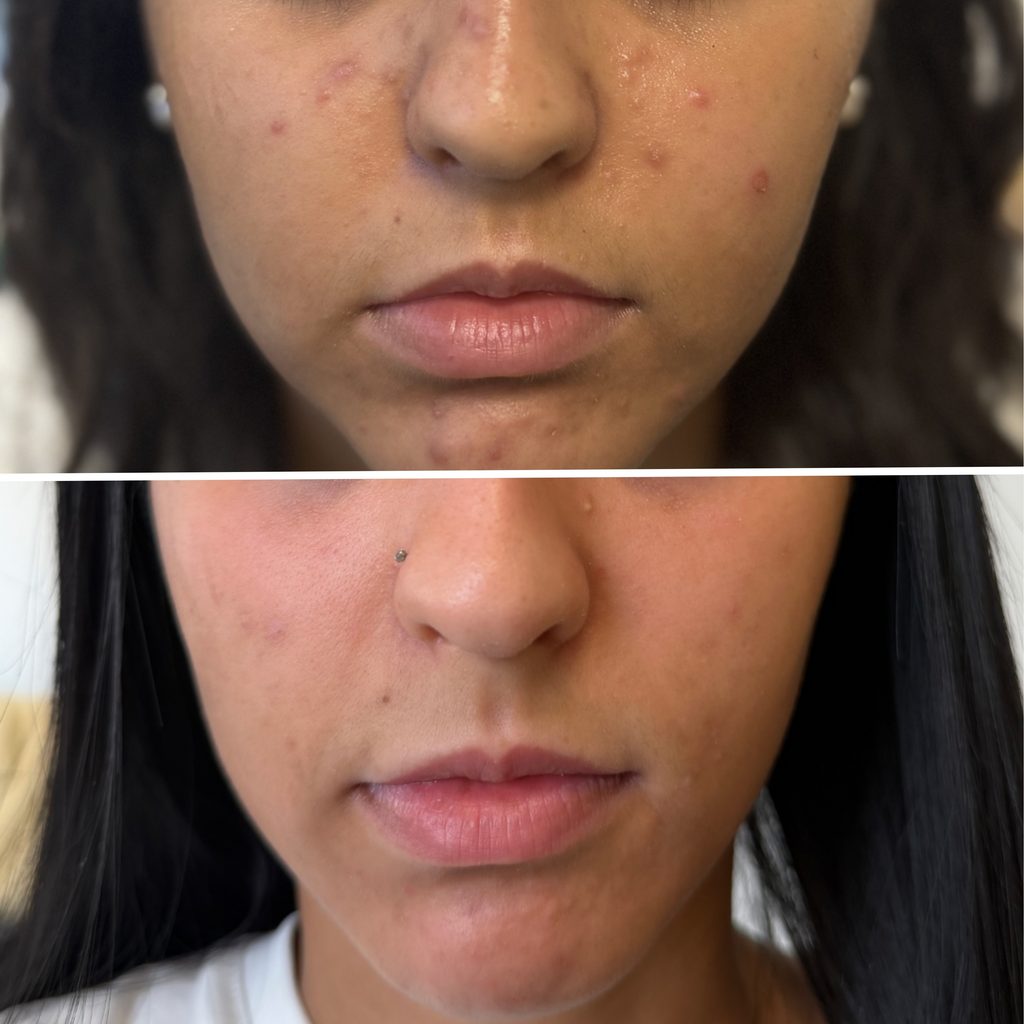
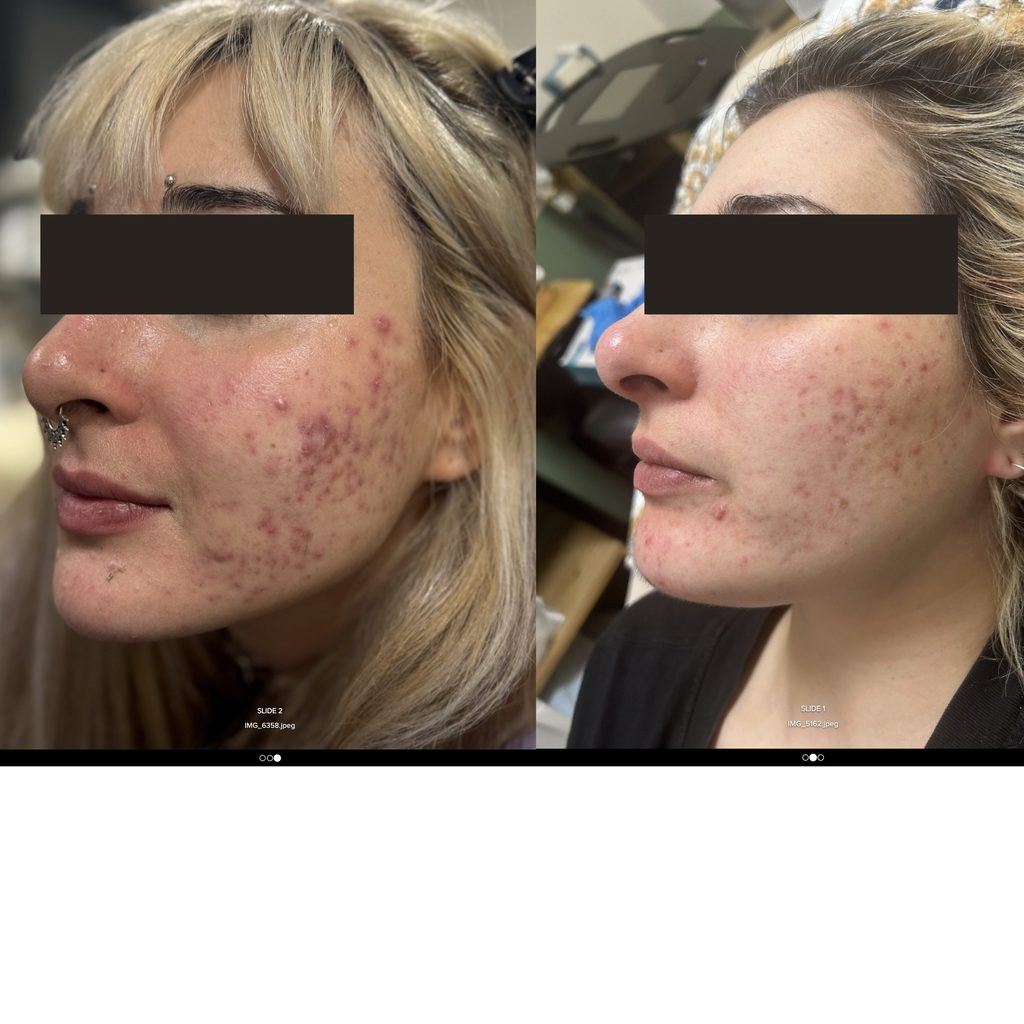
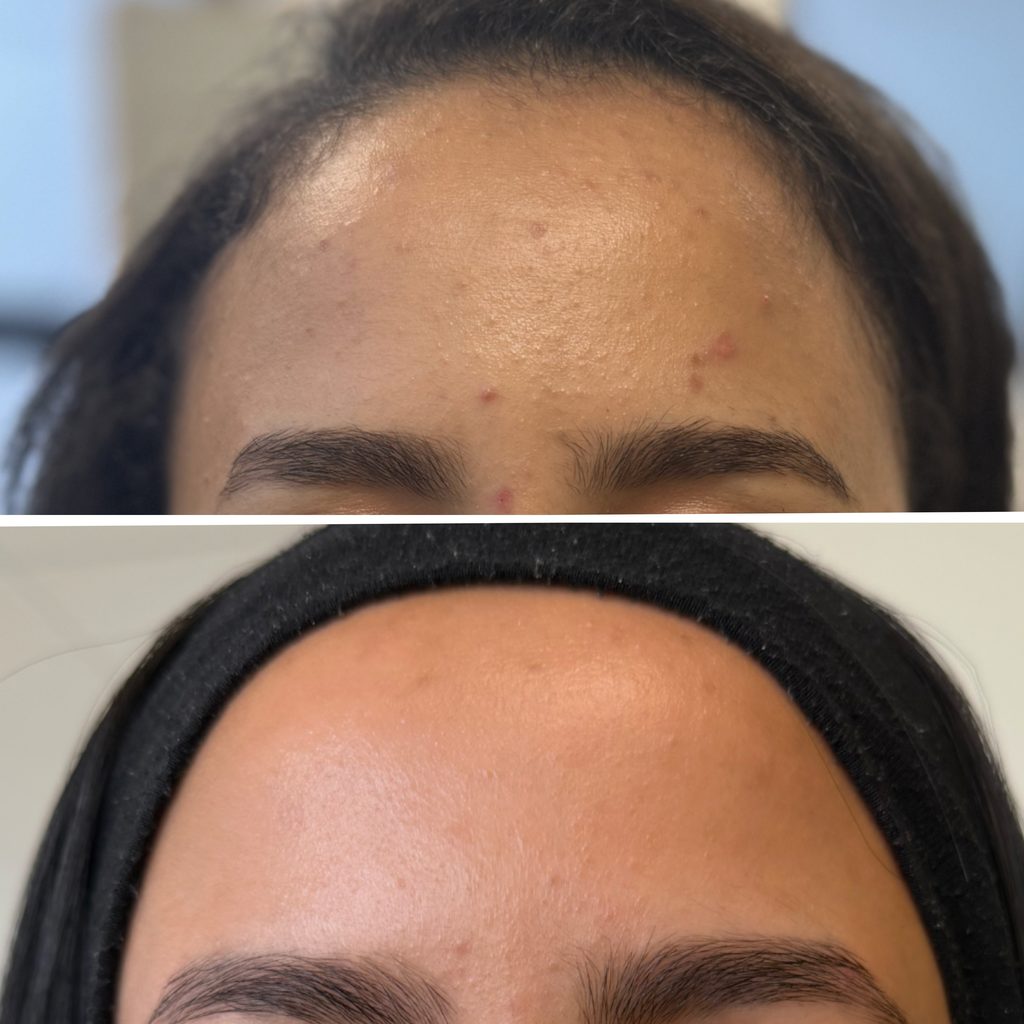
Peeling for acne scars
Some superficial acne scars can be reduced thanks to the skin renewal induced by the peeling. By stimulating skin regeneration, it helps to gradually smooth out irregularities and even out the skin’s relief.
Peeling for wrinkles and first signs of aging
Over time, cell turnover slows down and the skin gradually loses radiance and firmness. Peeling improves skin texture, fades fine lines and restores a fresher, more even look to the complexion.
Peeling for uneven skin texture and dilated pores
When the skin has enlarged pores, uneven skin texture or a dull complexion, peeling promotes the elimination of dead cells and gradually refines the skin surface. The skin looks smoother, softer and regains more radiance.
During your consultation at the Biolaser center in Saint-Louis, near Basel, Mulhouse, Colmar, Lörrach and Weil am Rhein, the doctor determines the type of peeling that is best suited to your skin and your aesthetic goals.
What are the different types of peels?
There are several categories of dermatological peels, which are distinguished by their depth of action and the imperfections they treat. At the Biolaser center, the choice of peeling is made during the medical consultation according to your skin, your objectives and the desired results.
| Type of peel | Main indications | Recovery Time |
| Superficial peeling with fruit acids (AHA/BHA) | Radiance of complexion, oily skin, light acne, dilated pores, uneven skin texture | Little or no social eviction |
| Medium TCA peel | Skin aging, fine lines, certain acne scars, more marked blemishes, pigment spots, | A few days of peeling |
| Phenol peeling | Deep wrinkles, advanced skin aging and some significant skin changes | Longer recovery requiring medical follow-up |
Superficial peeling with fruit acids (AHA/BHA)
The superficial peel is a gentle treatment that acts mainly on the most superficial layers of the skin. It improves the radiance of the complexion, refines the skin texture, tightens pores and reduces light imperfections. Carried out in several sessions, it generally does not require interruption of daily activities.
→ Learn more about superficial peeling with fruit acids.
The medium TCA peel
The medium trichloroacetic acid (TCA) peel works more deeply. It is indicated when imperfections are more pronounced, including certain pigment spots, the first signs of skin aging or certain acne scars. A period of desquamation is usually observed in the days following treatment.
→ Learn more about the medium TCA peel.
Phenol peeling
The phenol peel is the deepest chemical peel. It is reserved for the treatment of marked wrinkles, advanced skin ageing and certain important skin alterations. Because of its power, it requires very supervised medical care and more important follow-ups than superficial or medium peels.
As each skin is unique, the choice of peeling does not depend solely on the problem to be treated. The doctor also takes into account your phototype, the sensitivity of your skin, your lifestyle habits and the desired result in order to offer you the most suitable protocol.
How does a peeling session work?
Each dermatological peel is carried out according to a precise protocol to guarantee its effectiveness while respecting your skin. A session usually lasts between 15 and 30 minutes, depending on the area treated and the type of peel chosen.
A medical consultation before treatment
Before any first session, a consultation with the aesthetic doctor is essential. It allows us to analyze your skin, identify your expectations and determine the most appropriate treatment for your problem.
The doctor evaluates in particular:
- the quality and thickness of your skin;
- the presence of pigment spots, blemishes, wrinkles or scars;
- your phototype;
- your medical history and any contraindications.
At the end of this consultation, a personalized protocol is proposed to you, with the type of peeling recommended and the number of sessions required.
The course of the session
The treatment takes place in several stages:
- Cleansing and preparation of the skin to remove impurities and optimize the action of the peel.
- Application of the peeling solution, the concentration of which is adapted to your skin and the indication being treated.
- Neutralization of the peel, when the protocol requires it, or application of a soothing treatment.
- Apply a repairing cream and remind you of the instructions to follow after the session.
During application, it is common to feel a slight tingling or a feeling of heat. These sensations are normal, temporary, and disappear quickly after treatment.
An LED session to promote recovery
Depending on the indications, an LED phototherapy session may be offered following the peel.
This cool light helps to soothe the skin, decrease inflammation and promote skin renewal triggered by the peel. It also helps to improve post-session comfort and optimize treatment results.
What are the consequences of a dermatological peel?
The aftermath of a dermatological peel varies according to the depth of the treatment performed. In any case, it is normal for the skin to react for a few days: this reaction is part of the skin renewal process.
Right after the session
Immediately after treatment, the skin may have:
- slight redness;
- a feeling of warmth comparable to a mild sunburn;
- a feeling of tightness.
These effects are temporary and usually disappear within a few hours for a superficial peel.
Normal flaking in the following days
From the second or third day, peeling (peeling skin) may appear. Its intensity depends on the type of peel performed and the sensitivity of your skin.
This phase is normal: it corresponds to the elimination of superficial cells and gradually gives way to smoother, more homogeneous and brighter skin.
During this period, it is important not to tear off the small skins in order to promote optimal healing.
Treatments to follow after a peel
To optimize results and protect your skin, a few precautions are essential:
- apply a moisturizing and repairing cream as recommended by the doctor;
- avoid scrubs and irritants for a few days;
- do not expose the skin to the sun;
- Apply SPF 50+ sunscreen daily, even on overcast days.
Rigorous sun protection is essential throughout the protocol and in the weeks following the treatment to limit the risk of hyperpigmentation.
Can we resume our activities quickly?
In the majority of cases, daily activities can be resumed as soon as the session is over, especially after a superficial peel.
After a medium TCA peel, a few days of flaking are usually necessary before the skin returns to a completely normal appearance. The doctor will inform you, before the treatment, of the expected follow-up according to the protocol chosen.
What results can be expected from a dermatological peel?
The results of a dermatological peel are gradual and depend on several factors: the problem treated, the type of peel performed, the number of sessions and the characteristics of your skin.
From the first days after the treatment, the skin generally regains more radiance and a more even appearance. Over the course of the sessions, the benefits continue to improve thanks to the cell renewal stimulated by the peeling.
Depending on the indication, the treatment can make it possible to:
- illuminate the complexion and restore radiance to the skin;
- refine skin texture;
- tighten enlarged pores;
- reduce excess sebum and blemishes;
- reduce pigment spots;
- fade some fine lines;
- improve the appearance of certain superficial scars, especially after acne.
For more marked indications, such as certain scars or deep pigment spots, several sessions are usually necessary to obtain an optimal result.
Peeling does not stop skin aging and does not replace a good skincare routine. On the other hand, when it is carried out as part of a personalised protocol and combined with daily sun protection, it can sustainably improve the quality of the skin and preserve its radiance.


Why choose Biolaser for your dermatological peel?
Each dermatological peel performed at the Biolaser center is subject to a medical consultation in order to choose the most suitable treatment for your skin and your goals. Depending on the indications, the doctor will refer you to a superficial peel with fruit acids (AHA/BHA) or a medium peel with TCA.
Located in Saint-Louis, near Basel, Mulhouse, Lörrach and Weil am Rhein, the center welcomes patients from France, Switzerland and Germany who wish to improve the quality of their skin in the long term through personalized care.
Is the dermatological peel painful?
Treatment is generally well tolerated. During application, it is normal to feel a slight tingling or a feeling of heat, which disappears quickly after the session.
How many peeling sessions are necessary?
The number of sessions depends on the indication being treated and the type of peel. A superficial peel is often performed as a treatment of several sessions, while a medium peel generally requires fewer treatments.
Can you do a peel in summer?
The peel is preferably carried out in autumn or winter, when the sun exposure is lower. SPF 50+ sun protection is essential throughout the treatment and in the weeks that follow.
How long does it take to see the results?
The skin often looks brighter from the first few days. The results then continue to improve gradually over the course of the sessions thanks to cell renewal.
Can you go back to work after a peel?
Yes. After a superficial peel, daily activities can usually be resumed immediately. A medium peel may cause flaking for a few days.
What is the difference between a superficial peel and a medium peel?
The superficial peel acts on the outermost layers of the skin to improve radiance, skin texture and light blemishes. The medium peel penetrates deeper to treat certain dark spots, fine lines or scars.
Is peeling suitable for all skin types?
A peel can be performed on many skin types, but the protocol must always be adapted to the phototype, skin sensitivity and the problem being treated. A medical consultation is essential before any treatment.
Can a peel be combined with other aesthetic treatments?
Yes. Depending on your goals, peeling can be integrated into a global aesthetic medicine protocol. Your doctor will tell you the treatments that can be combined and the time to be respected between each procedure.