Seborrheic keratosis: CO2 laser treatment in St. Louis near Basel
What is keratosis or seborrheic wart?
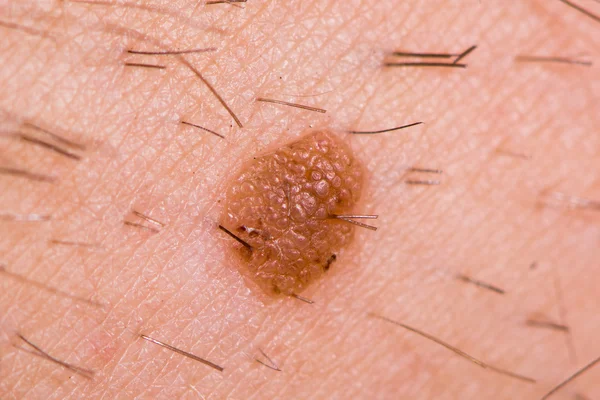
Seborrheic keratosis is an extremely common benign skin lesion, especially after the age of 40 or 50. Often described as a small brown “crust”, an embossed wart or a rough patch stuck to the skin, it can appear on different areas of the body, including the face, back, chest or scalp.
Even if it is not serious in the vast majority of cases, seborrheic keratosis can become aesthetically bothersome, irritated by friction or be confused with other skin lesions. In an aesthetic context, treatments such as CO2 laser, cryotherapy or curettage can be used to effectively remove these lesions and improve the appearance of the skin.
The Biolaser center, located in Saint-Louis, welcomes patients from Mulhouse, Colmar, Belfort as well as from Basel, Weil am Rhein or Lörrach for the management of benign skin lesions with laser.
When should you consult?
Even if seborrheic keratosis is benign, it is important to consult in the following cases:
- Quick Change.
- bleeding;
- persistent inflammation;
- of diagnostic doubt;
- of the appearance of a highly pigmented or asymmetrical lesion.
A medical examination can confirm the diagnosis and rule out further skin lesions.
Why do seborrheic keratoses appear?
The exact causes of seborrheic keratosis are not fully understood, but several factors are known to contribute to its development:
- Genetic factors: Genetic predisposition plays an important role. People with a family history of seborrheic keratoses are more likely to develop this condition.
- Age : These injuries are more common in people over the age of 40, and their frequency increases with age.
- Sun exposure : Although seborrheic keratoses can appear in areas that are not exposed to the sun, prolonged exposure to UV rays can contribute to their appearance in exposed areas.
- Oily skin: Some studies suggest that people with oilier skin may be more prone to developing seborrheic keratoses.
- Hormonal factors: Hormonal changes, although less well understood, can also influence the appearance of these lesions.
While these factors may contribute to the development of seborrheic keratoses, it is important to note that they are benign and are not usually associated with an increased risk of skin cancer.
Treatment of seborrheic keratoses with CO2 laser
The CO2 laser is now one of the most widely used treatments to remove seborrheic keratoses in a precise and controlled manner.
The laser beam gradually vaporizes the lesion while preserving the surrounding tissue as much as possible. This technique allows you to obtain a targeted treatment, particularly interesting for visible areas such as the face or décolleté.
Why choose the CO2 laser?
CO2 laser treatment has several advantages:
- high accuracy;
- Fast processing;
- sequences generally simple;
- little bleeding;
- good healing quality;
- Possibility of treating several lesions in the same session.
The CO2 laser is particularly suitable for seborrheic keratoses located on the face, temples or exposed areas.
How does a session work?
1. Initial consultation: Prior to treatment, a consultation with a dermatologist or qualified physician is necessary to assess the lesions and discuss the expected results. The doctor will also check if the CO2 laser is the best option for your skin type and specific needs.
2. Skin preparation : On the day of the treatment, the affected area is cleansed and a local anesthetic may be applied to minimize discomfort during the procedure.
3. Laser application: The practitioner uses the CO2 laser to precisely target seborrheic keratoses. The laser emits a concentrated beam of light that vaporizes the cells of the lesion, leaving the surrounding skin intact. This accuracy reduces the risk of scarring.
4. Duration of treatment: The duration of treatment can vary depending on the number and size of lesions to be treated, but it is usually quick, often completed within a few minutes to half an hour.
5. Post-treatment care: After the procedure, specific skin care instructions are provided. It is important to keep the treated area clean, apply recommended moisturizers, and avoid direct sun exposure to promote rapid healing.
What are the consequences after the treatment?
After the session, redness and small scabs may appear temporarily on the treated areas. Healing is gradual over a few days to a few weeks depending on the depth of treatment.
Rigorous sun protection is usually recommended during the healing phase.
Benefits of CO2 Laser Treatment for Seborrheic Keratoses
1. Precision: The CO2 laser specifically targets the tissues concerned, allowing precise destruction of lesions while preserving the surrounding skin. This reduces the risk of scarring and damage to healthy tissue.
2. Efficacy: This treatment is very effective in eliminating seborrheic keratoses, often in a single phase. The lesions are usually completely vaporized, which offers long-lasting results.
3. Minimisation of scarring: Since the CO2 laser acts precisely, the risk of visible scarring is reduced compared to other removal methods, such as curettage or cryotherapy.
4. Fast recovery: Most patients experience rapid recovery after treatment. Although redness or slight swelling may occur, it usually disappears within a few days.
5. Less pain: Although some patients may experience discomfort during the procedure, the use of local anesthetics helps minimize pain, and the treatment is often well tolerated.
7. Treatment of multiple lesions: The CO2 laser can be used to treat multiple lesions in a single session, which is convenient for patients with multiple seborrheic keratoses.
Is the treatment painful?
Treatment of seborrheic keratoses with CO2 laser is generally well tolerated. Patients mainly describe a feeling of warmth or small tingling during the session.
When the lesions are numerous or located in a sensitive area, local anesthesia may be offered to improve comfort.
Can seborrheic keratosis be removed from the face?
Yes. The CO2 laser is particularly interesting for treating seborrheic keratoses located on the face thanks to its precision.
The lesions present:
- on the temples;
- the cheeks;
- the forehead;
- eyelids;
- facial contour;
- The cleavage
can be treated in a targeted manner to improve the aesthetic appearance of the skin.
However, the choice of technique depends on the size, relief and exact location of the lesions.
Is there a risk of recurrence?
Seborrheic keratosis that is properly treated usually disappears permanently. On the other hand, new lesions can appear over time on other areas of the skin.
This phenomenon is related to natural skin aging and not to a failure of the treatment.
Seborrheic keratosis: what is the difference with a mole or skin cancer?
Seborrheic keratosis is a benign lesion, but some skin lesions can sometimes resemble it.
A medical examination is important in order to differentiate seborrheic keratosis:
- a mole (nevus);
- actinic keratosis;
- carcinoma;
- or more rarely of melanoma.
In case of doubt, recent modification or unusual appearance, a medical evaluation remains essential.
Why treat seborrheic keratosis?
Even if it is benign, seborrheic keratosis can become bothersome:
- aesthetically;
- when it clings to clothes;
- in case of repeated irritation;
- when it is located on a visible area.
The treatment improves the comfort and appearance of the skin, especially when the lesions are numerous or very visible.
Price treatment of seborrheic keratosis with ablative CO2 LASER
| Seborrheic keratosis : small area: 1 lesions up to 3 cm2 | 190 € |
| Seborrheic kerostosis: medium area: several small lesions (Max 10/session) | 390 € |
Treatment of seborrheic keratoses in Saint-Louis near Mulhouse and Basel
The Biolaser center, located in Saint-Louis, offers the treatment of seborrheic keratoses by CO2 laser.
Thanks to its proximity to Mulhouse, Colmar and Belfort, but also to Basel, Weil am Rhein, Lörrach and the Swiss and German border towns, the centre welcomes patients from all over the region in search of precise laser treatment for benign skin lesions.
WE ANSWER YOUR QUESTIONS
Is seborrheic keratosis dangerous?
No, it is a benign lesion in the vast majority of cases. However, a medical examination is still important in case of doubt.
Can seborrheic keratosis be removed with a laser?
Yes. The CO2 laser makes it possible to precisely remove seborrheic keratoses from different areas of the body and face.
Does the treatment leave a scar?
The risk of scarring depends on the size of the lesion, the area treated and the specific healing of each patient, but the CO2 laser generally provides good quality healing.
Can seborrheic keratosis come back?
The treated lesion usually disappears, but new seborrheic keratoses may appear over time.
What is the difference between seborrheic keratosis and a wart?
Seborrheic keratosis is a lesion related to skin aging, whereas warts are caused by a virus.
Can several lesions be treated during the same session?
Yes, several seborrheic keratoses can often be treated in the same session depending on their number and location.
Are there alternatives to CO2 laser treatment?
Yes, there are several alternatives to CO2 laser treatment for seborrheic keratoses, including cryotherapy (gel to destroy the lesion), curettage (scraping the lesion), and topical treatments containing ingredients like salicylic acid. Each method has its advantages and disadvantages, and the choice of treatment will depend on factors such as size, number of lesions, and personal preference. A consultation with a specialist doctor will help you determine the best option for you.